You don’t need to be a “spiritual person” to get something out of energy healing. You don’t need perfect weather to have a good week of it either.
Most people planning a Bali trip hunt for the one flawless month. That’s a sensible instinct for a beach holiday. It matters less for a residential retreat, where most of the week happens in a quiet villa in Sanur with a small group and a set daily rhythm.
Comfort still counts, though. Heat, humidity and rain change how you sleep, what you pack and how your free time feels. So here’s a plain guide to when to visit Sanur, matched against the retreat dates still open.
The Short Answer: Best Month to Visit Sanur for a Retreat
The drier months, roughly April to October, are the most comfortable. You get more sun, lower humidity and cooler nights.
The retreat is built to work in any weather.
The right month comes down to what you tolerate: a sticky afternoon, a sudden downpour, or a busier beach. One thing to know up front is that the five dates still open all fall in the wetter half of the year. The driest weeks (6–12 Sep, 4–10 Oct and 25–31 Oct 2026) have already run, so if guaranteed sunshine is your deal-breaker, the remaining calendar isn’t the best match for you.
Dry season vs wet season in one minute
- Dry season (roughly April to October): mostly sunny days, lower humidity, cooler nights, and little rain.
- Wet season (roughly November to March): warm and humid, with rain arriving in bursts and everything turning lush and green.
- Driest and most comfortable: the middle of the dry season, broadly the middle of the year through to about September.
- Wettest and most humid: the middle of the wet season, broadly January to March.
Sanur Weather by Month: A Plain-English Climate Guide
Nobody flips a switch on 1 November and the rain starts. The seasons blend, and April–May and October–November are the in-between months, when you might get either kind of day.
Sanur sits on Bali’s sheltered southeast coast, which tends to make it feel gentler than people expect. Rain here usually comes as showers rather than all-day washouts, although conditions vary from year to year. For a current forecast before you fly, check BMKG, Indonesia’s meteorological agency.
Dry season (roughly April to October): sun, lower humidity, cooler nights
Mornings are bright and the air feels lighter. Evenings cool down enough that sleeping is easy, and you can sit outside after dinner without feeling sticky. If you’ve been put off by the idea of Bali heat, this is the season that changes your mind. It’s also the classic answer if you’re researching the best season for a Bali holiday.
Wet season (roughly November to March): warm, humid, rain in bursts
It stays warm all the way through. The difference is the air: heavier, and a shower can arrive in the afternoon or overnight, then clear. You’ll see more cloud and a lot more green. A wet-season day often still includes plenty of sun, just not on a reliable schedule.
Your Retreat Dates Mapped to Sanur’s Seasons
Here are the five weeks still open, with a plain verdict on each.
- 22–28 Nov 2026: early wet season. Humidity is building, with showers most likely in the afternoon or evening. Quiet beaches.
- 13–19 Dec 2026: properly wet and humid. Expect rain in bursts. The Christmas rush is just starting to build.
- 17–23 Jan 2027: peak-rain territory and the greenest of the lot. Warm, humid, and calm once the New Year crowds leave.
- 7–14 Feb 2027: still wet and humid, with rain often easing as the weeks go on.
- 14–20 Mar 2027: the tail end of the wet season. Showers are usually thinning out, so it’s the closest of the remaining dates to dry-season comfort.
November and December 2026: the shift into the wet season
Late November is a gentle introduction. The wet season is only just arriving, so you’ll feel the humidity before you feel much rain. By mid-December, rain is part of the pattern, and you should plan for a shower on most days.
January to March 2027: peak rain, then easing
January is when Sanur is at its wettest and greenest. By February the pattern often starts to ease, and March is usually the softest landing of the season. Because the seasons vary each year, treat all of this as a likely pattern and not a promise.
The earlier 2026 dates (September and October) as the dry-season benchmark
The September and October weeks ran in dry-season conditions, with the late October week sitting at the end of that stretch. They’re the benchmark for sunshine and lower humidity. They’ve finished, so you can’t book them now, but they tell you what you’re comparing the remaining dates against.
How Weather Actually Shapes the Retreat Week
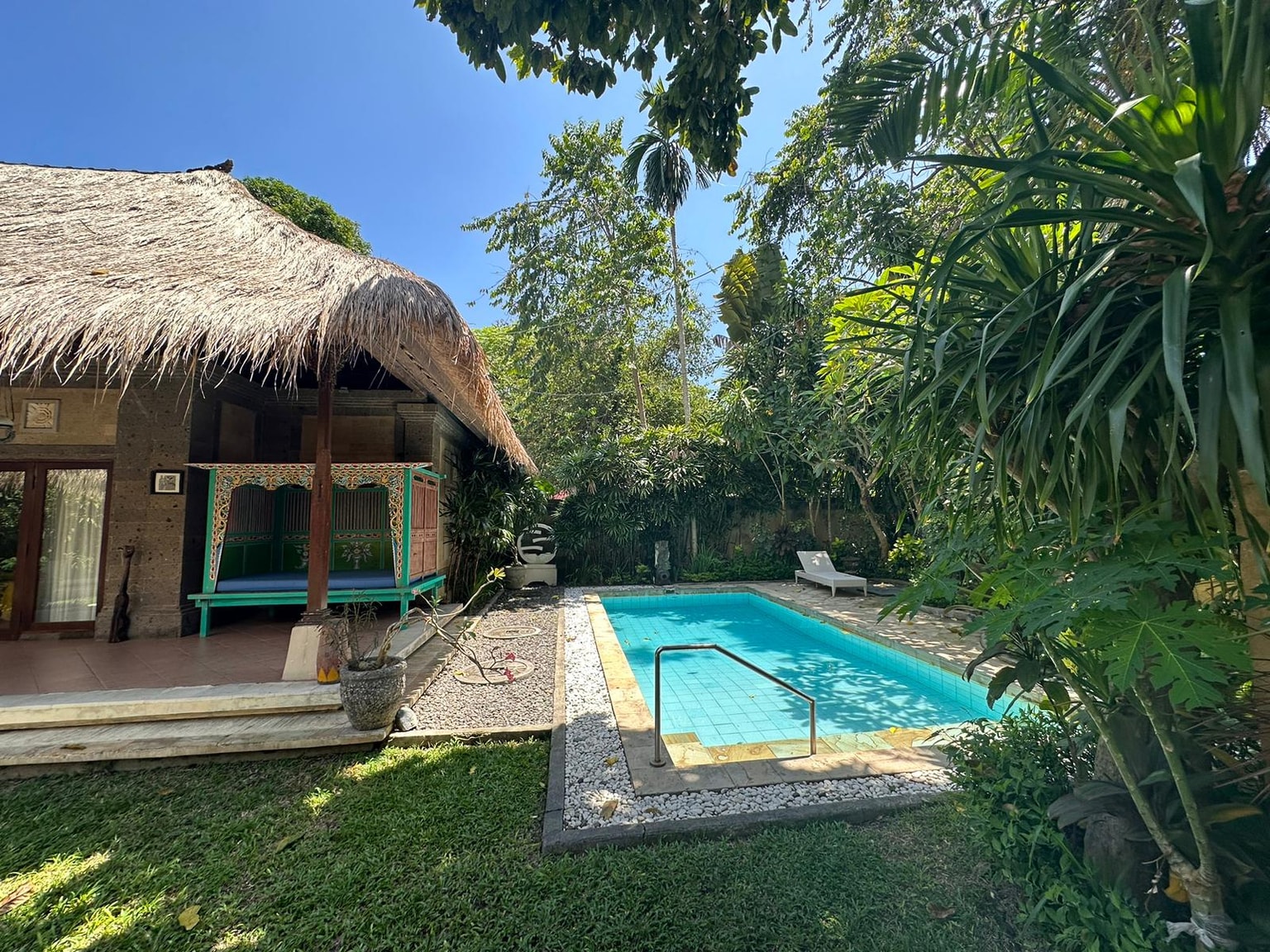
Rain rarely disrupts the core of the week. Morning meditation, group practice and the two private in-room sessions each day all happen at the villa, under a roof. Your private en-suite room is yours alone, and the pool is there when the sky clears.
Two parts of the week are more exposed to weather, and I’d rather name them than hide them. Those are the Wednesday excursion and the Friday free afternoon. The first is a full day out with temple visits and Balinese healers, so you’re in and out of cars and courtyards. The second is unstructured, so the weather decides the mood.
Wednesday temple excursion and Friday free time on a rainy day
On Wednesday, a shower doesn’t cancel the experience. It just means you carry a light rain jacket and wear shoes you don’t mind getting damp. Temple courtyards and village homes feel quite different in soft rain, and plenty of people say that’s part of the charm.
Friday is yours. If it’s raining, you could read by the villa, write in a journal, nap, or swim between showers. If it clears, you can wander out and explore Sanur. Either way, nothing is required of you.
This applies to the whole retreat, not just the dry weeks: rain changes the scenery, not the programme.
Crowds and Comfort in Sanur Specifically
Sanur is calmer than Kuta or Seminyak at any time of year. Wide, flat beachfront, early-morning walkers, and far less nightlife noise. If you’re curious why that suits newcomers, see what Sanur offers beginners.
The broad pattern is simple. July–August and the Christmas–New Year period are busiest on the beach and roads. The shoulder months feel quieter, and that includes late November, much of January after the holidays, and March.
Crowds also matter less on this retreat because it’s capped at 6 guests. You’ll spend most of your week in a small group at the villa, so a busy beach is more of a backdrop than a problem. For the demand and availability side of timing, our booking guide for 2026 covers it.
Which Month Suits Which Kind of Guest
Think of this as a chat with a friend who’s on the fence. None of these weeks is “wrong”. Each suits a different temperament, and I won’t oversell any of them.
If you want sunshine and lower humidity
Pick the most hopeful of the remaining dates, 14–20 Mar 2027. Rain is usually thinning by then, and the humidity should be easing. It still sits in the wet season, so you may well get some showers.
If you’re very heat-sensitive and want reliably dry weather above everything else, the remaining dates may not give you that. It’s better to know now.
If you’d rather have green, quiet and a slower pace
22–28 Nov and 17–23 Jan suit you. The landscape is lush, the beaches are calmer, and a rainy afternoon fits a week that’s about slowing down. Rain-tolerant? You’ll probably enjoy these weeks more than you expect.
If you’re escaping an Australian winter or summer
All the remaining dates fall in the Australian summer and early autumn. So you’re not escaping winter. You’d be trading Australian summer heat for warm, humid, tropical weather. It’s not cooler, but it’s softer, greener and slower. For many people that’s the point.
If you’re a first-timer nervous about travel, 13–19 Dec and 7–14 Feb are the middle of the pack. If you want to know how others found it, read what past guests experienced.
Choosing Your Week and Getting Ready
Packing is where weather really changes things. For a humid or rainy week, bring light, breathable layers, a compact rain jacket, quick-drying clothes and shoes that handle a wet path. For a drier week, pack for sun and cooler evenings instead. Our guide on what to pack for a Bali retreat goes through the full list.
The rhythm of the week is the same whatever the weather. You arrive on Sunday in time for lunch, and the retreat concludes on Saturday after the closing brunch at Sindhu Beach. Airport pick-up is included, so you won’t be negotiating a taxi queue after a long flight. The departure transfer is your own cost.
If this is your first retreat, read how to prepare for your first retreat before you go. It’s written for nervous first-timers.
The 7-day energy healing retreat is AUD $2,890 per person, covering the whole week, and you can see what the week costs in more detail. When you’re ready, choose your retreat date from the five weeks still open. There are only 6 places each week, so if one date feels right, ask us a question first. There’s no pressure either way.
Frequently asked questions
Will rain ruin my retreat week in Sanur?
No. Morning meditation, group practice and the two private in-room sessions each day happen at the villa, so rain rarely disrupts them. The Wednesday temple excursion and the Friday free afternoon are the parts most affected, and a light rain jacket and a relaxed attitude cover most of it.
Which of the remaining dates is likely to be the driest?
14–20 Mar 2027 is the closest to dry-season comfort, because the wet season is usually easing by then. All five remaining dates (22–28 Nov, 13–19 Dec, 17–23 Jan, 7–14 Feb and 14–20 Mar) fall in the wetter half of the year, so showers are possible in every one.
Is Sanur crowded in the wet season?
Generally not. Sanur is calmer than Kuta or Seminyak all year, and the busiest stretches are July–August and the Christmas–New Year period. With a retreat capped at 6 guests, crowds have little effect on your week.
What should I pack for a wet-season retreat week?
Bring light, breathable clothing, a compact rain jacket and shoes that cope with wet paths. You’ll want layers for cooler evenings as well. The packing guide on our blog lists the rest.
How do I get from the airport to the villa?
Airport pick-up is included in the AUD $2,890 price, so you’re met on arrival. If you have chosen to arrive in Bali the day before and staying in a hotel; we can still pick you up and take you there. Arriving on the Sunday morning of a retreat around 11am is a good idea to settle into your room before lunch. The departure transfer after the Saturday brunch is at your own cost.